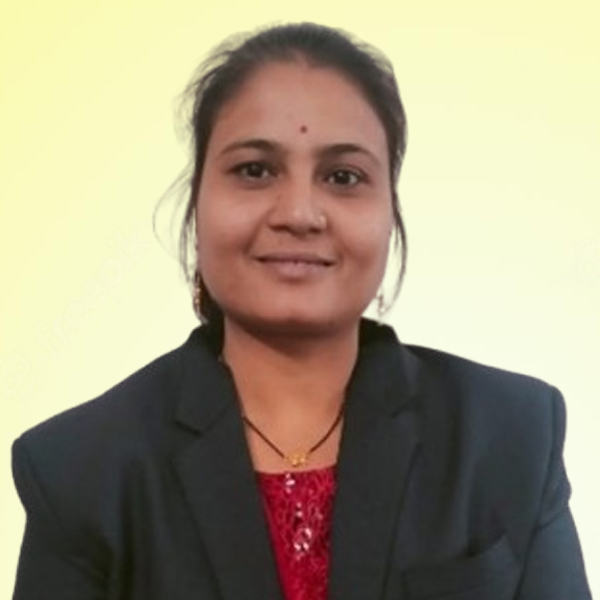
Head, Electronic & Communication Engineering Department
BE (ETC), MTech (ETC)
95035 81118
hodpoly.etc@tgpcet.com
It gives me immense pleasure to extend a warm welcome to the latest edition of our departmental newsletter. The Department of Electronics and Telecommunication Engineering continues to evolve and grow, guided by our commitment to academic excellence, research innovation, and holistic student development.
In today’s fast-changing world, where technology is deeply integrated into every facet of life, our role as educators and engineers becomes increasingly crucial. From cutting-edge advancements in 5G, IoT, and AI to the continued relevance of core electronics, our department strives to provide a well-rounded foundation that blends theory with hands-on experience.
This edition showcases a range of achievements—be it student innovations, faculty research contributions, industry collaborations, or technical events. I am particularly proud of the enthusiasm our students have shown in participating in national-level competitions, publishing papers, and securing internships with reputed firms.
I also take this opportunity to express my gratitude to the dedicated faculty and staff whose constant support keeps the department thriving, and to our alumni whose success continues to inspire our current batches. Let us keep pushing boundaries, nurturing curiosity, and building a future that is not only technologically advanced but also socially responsible.
The Department of Electronics and Communication Engineering (ECE), established in 2003 with a intake of 30 students, is dedicated to imparting quality education and fostering innovation in the field of electronics, communication, and allied technologies. The department’s goals focus on nurturing technically proficient, research-oriented, and ethically responsible engineers capable of addressing real-world challenges through creative problem-solving and technological excellence. Its core values emphasize integrity, lifelong learning, teamwork, innovation, and a commitment to societal and industrial advancement through sustainable engineering solutions.
Serving as a vital pillar of the institution, the department plays a pivotal role in enhancing the academic and research environment by promoting interdisciplinary collaboration, industry partnerships, and continuous professional development. It actively contributes to institutional growth by preparing students to excel in competitive global environments and contribute meaningfully to emerging areas such as communication systems, embedded design, VLSI, and signal processing. The department’s dedication to maintaining academic rigor and quality standards has earned it institutional accreditation and recognition, reflecting its consistent pursuit of excellence and alignment with national and international benchmarks in engineering education.
To Emerge as a learning Centre in the Domain of Electronics & Communication Engineering
M1: To impart quality technical education and practical training in Electronics and Communication Engineering through effective teaching & learning process.
M2: To provide learning environment to face societal and industrial challenges of Electronics and Communication Engineering.
M3: To ensure overall development of students and staff members by inculcating knowledge and professional ethics as a part of lifelong learning.
PEO 1. Provide socially responsible, environment friendly solutions to Electronics & Communication engineering related problems adapting professional ethics.
PEO 2. Adapt to technological advancement, and pursue higher education or entrepreneurship in Electronics & Communication engineering.
PEO 3. Solve broad-based problems individually and as a team member communicating effectively in the world of work.
PSO 1. Electronics Equipment: Maintain modern tools, techniques, and simulation software.
PSO 2. Electronic Systems& communication Network: Maintain electronics circuits and communication systems.
| SR. NO. | NAME OF LABORATORY |
|---|---|
| 1 | Electronics Devices & Circuit Lab |
| 2 | Communication Electronics Lab |
| 3 | Microprocessor & Microcontroller Lab |
| 4 | Analog Circuit Lab |
| 5 | Digital technique Lab |
| 6 | IoT & its application Lab |
| First Semester | Second Semester |
|---|---|
|
ELECTRONIC MATERIALS & COMPONENTS |
|
| Third Semester | Fourth Semester |
|
ELECTRONIC MEASUREMENTS & INSTRUMENTATION |
ELECTRONIC EQUIPMENT MAINTENANCE & SIMULATION |
| Fifth Semester | Sixth Semester |
|
ENTREPRENEURSHIP DEVELOPMENT AND STARTUPS MOBILE & WIRELESS COMMUNICATION SEMINAR AND PROJECT INITIATION COURSE |
COMPUTER NETWORK & DATA COMMUNICATION EMERGING TRENDS IN ELECTRONICS |
| SR. NO. | SEM | COURSE NAME | COURSE CODE | CO | COURSE OUTCOME |
|---|---|---|---|---|---|
| 1 | 6 | EMERGING TRENDS IN ELECTRONICS | 316337 | CO1 | Select the appropriate processor for a specific type of application. |
| CO2 | Suggest the relevant techniques in the electronic system manufacturing process. | ||||
| CO3 | Suggest a different telecom network for the given application. | ||||
| CO4 | Connect IoT devices to cloud platforms for data storage and analysis. | ||||
| CO5 | Interpret drone component functions, guidelines, and applications. | ||||
| 2 | 6 | MANAGEMENT | 315301 | CO1 | Use relevant management skills to handle work situation. |
| CO2 | Apply techniques of product, operations and project management. | ||||
| CO3 | Use tools of recent management practices. | ||||
| CO4 | Plan suitable marketing strategy. | ||||
| CO5 | Utilize supply chain and HR management techniques. | ||||
| 3 | 6 | CAPSTONE PROJECT | 316004 | CO1 | Elaborate identified field problem. |
| CO2 | Conduct feasibility & viability analysis. | ||||
| CO3 | Apply knowledge to solve real problems. | ||||
| CO4 | Present project findings. | ||||
| 4 | 6 | DRONE TECHNOLOGY | 316335 | CO1 | Classify different types of drones. |
| CO2 | Interpret drone technology and rules. | ||||
| CO3 | State functions of drone systems. | ||||
| CO4 | Test the drone system. | ||||
| CO5 | Select drone for application. | ||||
| 5 | 6 | OPTICAL NETWORK AND SATELLITE COMMUNICATION | 316332 | CO1 | Interpret optical fiber communication system. |
| CO2 | Evaluate optical sources and detectors. | ||||
| CO3 | Establish fiber optic link. | ||||
| CO4 | Analyze satellite communication performance. | ||||
| CO5 | Maintain satellite earth segment. | ||||
| 6 | 6 | COMPUTER NETWORK AND DATA COMMUNICATION | 316338 | CO1 | Implement network topology. |
| CO2 | Select network model and media. | ||||
| CO3 | Troubleshoot data link errors. | ||||
| CO4 | Maintain network layers. | ||||
| CO5 | Interpret application layer protocols. | ||||
| 7 | 6 | AUTOMATION & PLC | 316334 | CO1 | Identify automation components. |
| CO2 | Interface I/O with PLC. | ||||
| CO3 | Develop ladder logic. | ||||
| CO4 | Develop application logic. | ||||
| CO5 | Use communication protocols. | ||||
| 8 | 6 | VLSI APPLICATION | 316340 | CO1 | Interpret CMOS circuits. |
| CO2 | Develop CPLD/FPGA circuits. | ||||
| CO3 | Use VHDL for design. | ||||
| CO4 | Develop VHDL programs. | ||||
| CO5 | Interpret VHDL simulation and synthesis. |
